The Cold Call Is on Life Support. The Recruitment Agencies Winning Now Are Building Communities Instead.
By Nitin
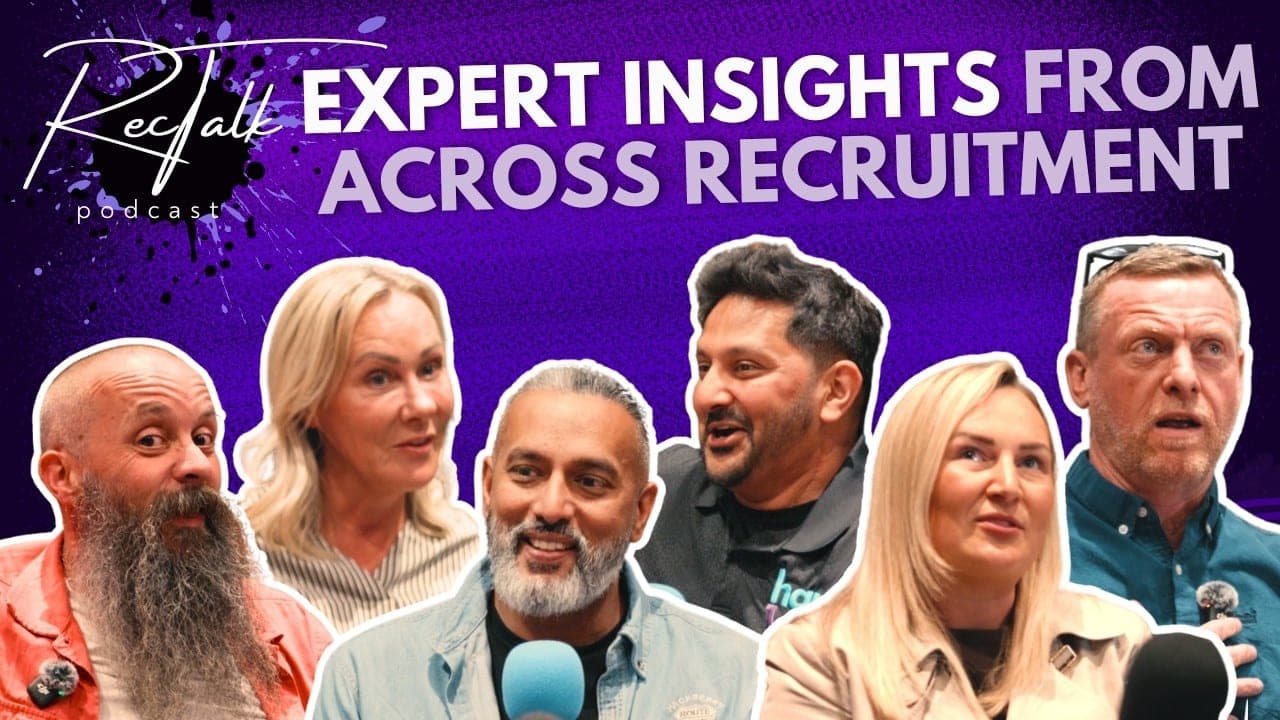
A LinkedIn message is three times more likely to get a reply than a cold call — and six times more likely to be opened than a cold email (Mobile Rocket (opens in a new tab)). But even that stat misses the bigger shift happening in recruitment right now. The most effective form of business development isn't cold outreach at all. It's community. At a live RecTalk Masterclass at The Peg & Grill in Birmingham — held ahead of a Recruitment Curry Club event — a panel including Bobby Banerjee (founder of the HAPI Test and the Recruitment Curry Club itself) and Jeremy Snell (founder of Your People Engine) put forward a compelling case: the agencies growing fastest in this market aren't winning through volume or technology. They're winning because people want to be around them.
Why Traditional Sales Approaches Are Running Out of Road
The numbers on cold outreach have been declining for years. Decision-makers are harder to reach, more sceptical of unsolicited contact, and drowning in identical approaches from every recruiter in their sector. The tactics that worked in 2015 — the morning call blitz, the speculative email with a CV attached — haven't disappeared, but their yield has dropped to the point where the ROI barely justifies the effort.
More importantly, the underlying relationship dynamic has changed. Buyers — and in recruitment that means hiring managers, procurement teams, and HR leads — have more options, more information, and less patience for a pitch that arrives before any trust has been built. The agencies still winning new business through pure outbound are doing so on the strength of exceptionally targeted, highly personalised approaches. The rest are spinning their wheels.
What's filling the gap isn't another sales technique. It's a fundamentally different way of thinking about what a recruitment business is for — and who it serves beyond its immediate client base.
What a Community-Led Recruitment Business Actually Looks Like
Bobby Banerjee didn't build the Recruitment Curry Club as a business development tool. He built it because he genuinely wanted to create a space where people in recruitment could connect, share, and enjoy each other's company without an agenda. The business development came later — and it came as a natural consequence of being someone people respected, liked, and wanted to work with.
That's the counterintuitive truth at the heart of community-led business development: the less transactional you are about it, the more commercial value it creates. When you run an event, a peer group, a Slack community, or a regular industry gathering — and you do it because you care about the people in the room — you become the person those people think of when they have a hiring need, a business challenge, or a referral to make. You don't need to pitch. You've already done the work.
Jeremy Snell's Your People Engine operates on a similar philosophy. The focus isn't on selling recruitment training — it's on building something genuinely useful for the industry. The commercial relationships that flow from that are durable in a way that transactional BD relationships rarely are. Clients who come to you because they trust you are harder to lose than clients who came because you happened to call on a Tuesday when they had a vacancy.
Creating Value Beyond the Vacancy
One of the most important shifts the panel discussed was moving away from the idea that a recruitment agency's job is to fill vacancies — and towards the idea that a recruitment agency's job is to help clients build better businesses. The vacancy is just the most obvious way that work shows up.
Agencies that position themselves as market experts — that share salary data, hiring trends, competitor intelligence, and talent insights — become valuable to clients even in the months when there's no live role. That consistent value creation keeps you front-of-mind in a way that even the best cold outreach can't replicate, because it's not about you, it's about them.
The practical version of this looks different for every agency — but common forms include regular market briefings, peer events for HR and talent leaders, community-driven content that addresses real challenges (rather than company announcements), and genuine investment in the professional development of people in the sector. The connecting thread is generosity. Give before you ask. Give without guaranteeing you'll get something back. Do it consistently. The compounding effect on reputation and referrals is significant.
How to Start Building Community Without Starting From Scratch
- Find the gathering that already exists and show up for it. The Recruitment Curry Club, sector-specific networks, local business groups — there are more communities than most recruiters realise. Being a consistent, generous presence in an existing community is often more effective than trying to build one from scratch.
- Create something genuinely useful, not just promotional. A market report that's actually useful. A roundtable where the conversation is off-the-record and honest. A peer group where nobody's selling. Useful things get shared. Promotional things get ignored.
- Measure relationship depth, not just event attendance. The question isn't how many people came to your thing. It's how many of them would refer business to you, and how many of them you could call tomorrow for an honest conversation. That's your community health metric.
- Be patient with the timeline. Community-led BD doesn't generate a placement in week two. It generates a reputation over 18 months that makes cold outreach largely unnecessary. Agencies that have made the shift consistently say they wish they'd started earlier.
- Understand people before you categorise them. The HAPI Test — Bobby Banerjee's personality assessment built for the recruitment industry — reflects a broader principle: the agencies building meaningful communities take the time to understand who they're talking to, what motivates them, and what they actually need. Treating people as people, not as pipeline entries, is the foundation.
Real Talk
Cold outreach isn't dead, but it's getting more expensive and less effective every year. Community isn't a marketing strategy — it's a way of operating that makes marketing largely unnecessary. The agencies that understand that distinction are building something that can't easily be replicated by a competitor with a bigger send list.
This post is inspired by the RecTalk Masterclass, recorded live at The Peg & Grill in Birmingham with Jeremy Snell, Jo Elwell, Bobby Banerjee, Billie Davoile, and Keith Davidson: Recruitment Masterclass: Financial Literacy, Community Building & The Future of Recruitment (opens in a new tab). Watch the full conversation on YouTube.
Want to find the tools that help you build smarter, relationship-led recruitment businesses? Browse 1,000+ vetted recruitment suppliers and 49,000 real reviews — free — at rectools.io.