The Spec CV Era Is Over. Here's What Actually Wins BD Now.
By Nitin
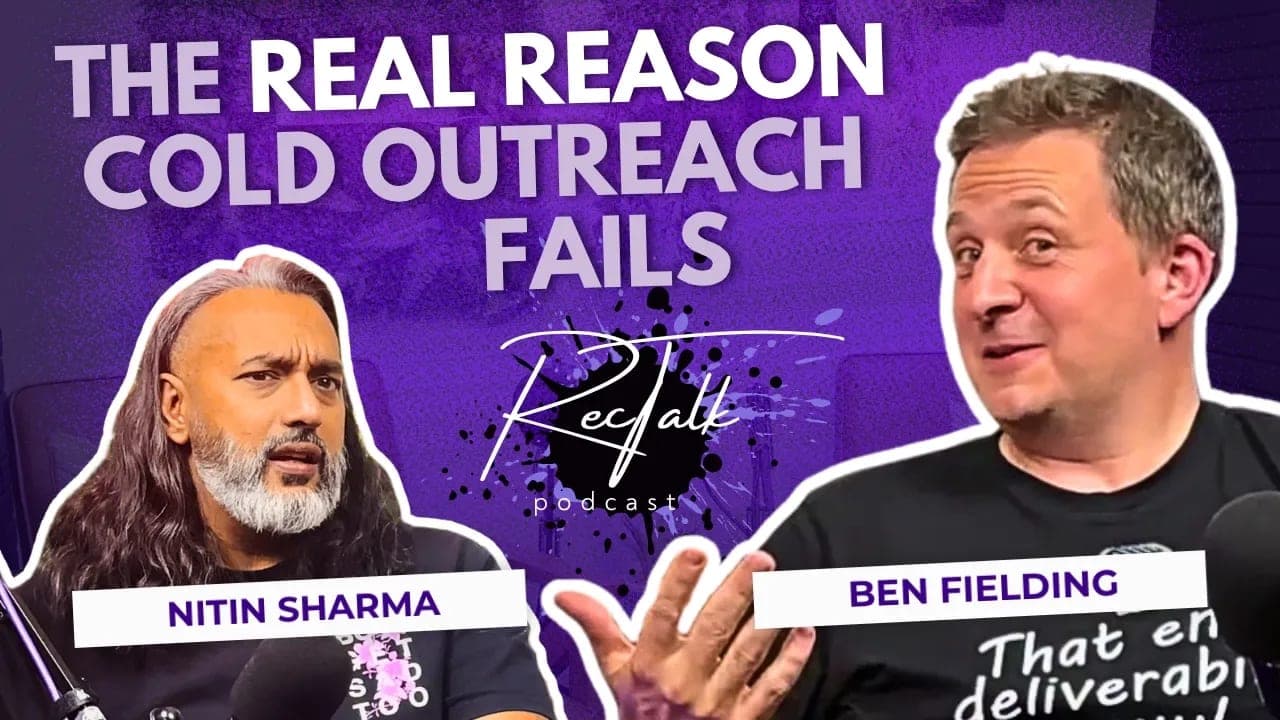
Personalised emails generate 29% higher open rates and a 41% higher click-through rate than generic outreach (Mailforge, 2026 (opens in a new tab)). That stat should land hard for any agency still relying on volume — sending hundreds of speculative CVs a week and wondering why the conversations aren't happening. Ben Fielding, founder of Quinset (opens in a new tab) and a regular on the recruitment conference circuit, sat down with Nitin Sharma on RecTalk to make the case that the volume-first BD model isn't just becoming less effective — it's actively hurting the agencies still running it. The replacement isn't complicated. But it requires a different way of thinking about what business development actually is.
Volume Was Never the Answer — It Just Used to Cover the Cracks
The spec CV model made sense when the noise level was low. Fire enough CVs at enough hiring managers and some would stick. Clients expected it. The market was less crowded. Your emails landed and got read because there wasn't much competition in the inbox. That era has gone.
Today's hiring managers and procurement leads are drowning in outreach from every direction — recruiters, SaaS vendors, consultants, staffing agencies. Their inboxes are full, their patience is thin, and their filters (mental and technical) are ruthless. Sending a speculative CV to a hiring manager you've never spoken to doesn't just fail to win business — it signals exactly the kind of recruiter they want to avoid: one who's focused on their own pipeline, not the client's actual problem. Ben's argument is that agencies which have relied on volume are now hitting a wall that more volume won't solve. The answer isn't to send more. It's to be worth responding to.
From Transaction to Trust: The New BD Playbook
Relationship-led BD isn't a vague philosophy — it's a structured way of showing up consistently for a defined set of target clients, over time, with genuine relevance. The mechanics look different from volume outreach, but the logic is straightforward: people hire recruiters they know, like, and trust. Your job in BD is to build that familiarity before you need a conversation.
Ben's framework starts with narrowing the target list rather than expanding it. Instead of 500 vague prospects, identify 50 companies where you have real insight into the market they're hiring in, genuine connections to the candidates they need, or direct experience placing similar roles. A smaller, tighter list lets you say things that are actually specific — and specific is what gets replies.
From there, the BD activity shifts from outreach to presence. That means sharing relevant market insight with no ask attached. It means commenting on a hiring manager's LinkedIn post with something more considered than "great post!" It means checking in after a candidate your client hired six months ago — not to cross-sell, but because you care how it went. None of this replaces direct outreach. But it means that when you do reach out directly, you're not a stranger.
Storytelling That Keeps You Front-of-Mind
One of the most underused tools in recruitment BD is the story. Not case studies in the traditional sense — glossy PDFs listing job titles and time-to-hire metrics. Actual stories: the problem the client had, why it was hard, how the situation unfolded, and what changed when the right person was placed. Stories are memorable in a way that credentials aren't. A hiring manager who read your case study two months ago probably remembers the story. They definitely don't remember your placement statistics.
The key is that the story centres on the client's problem and outcome — not the recruiter's process. Ben is clear on this in his approach: most recruitment marketing makes the recruiter the hero. The agency with the database, the specialist team, the years in the market. That's the wrong protagonist. The client is the hero. You're the guide who helped them get unstuck. Reframe the story and the response rate changes — because clients read it and think "that sounds like my problem."
Storytelling also works as content. A LinkedIn post walking through a difficult search, anonymised and honest about what went wrong before it went right, will get more engagement and more direct messages than a post announcing "we're hiring!" or "excited to be attending X conference." Engagement on your content builds your brand. Your brand builds familiarity. Familiarity is what gets you on the shortlist when a hiring need finally arises.
How to Shift From Volume to Relationship BD — Practical Steps
- Cut your target list in half. Take the 500 prospects you're vaguely pursuing and trim them to the 50–100 companies where you have genuine insight or a credible angle. Work that list properly before expanding it.
- Document your outcomes, not your services. Build a library of anonymised placement stories — the harder and more specific, the better. "We placed three engineering managers into a Series B scaling from 30 to 120 people in four months" is more compelling than "we specialise in engineering recruitment."
- Show up before you pitch. Follow your target clients. Engage with their content thoughtfully. Share relevant market data with no ask. Be someone they recognise before you appear in their inbox asking for a call.
- Make the ask small and specific. "Would it be worth 15 minutes to share what we're seeing in your market right now?" is easier to say yes to than a full introductory meeting. Small yeses build relationships.
- Use email to deepen, not replace, the relationship. Email is a tool for staying relevant between touchpoints — sharing an insight, referencing something from their LinkedIn, following up on a previous conversation. Use it to add value, not to transact.
- Track relationship depth, not just send volume. How many of your target 50 companies have you had a real conversation with in the past 90 days? That number matters more than your weekly outreach count.
Real Talk
The spec CV model worked when it was rare to be thoughtful. Now that it's table stakes, transactional BD blends into the noise. Agencies that win business in this market are building something their prospects actually want — context, insight, and the trust that comes from showing up consistently before they need anything. Start with fewer targets. Do more with each one.
This post is inspired by the RecTalk episode with Ben Fielding: Beyond Deliverability: Why Your Recruitment Emails Aren't Getting Replies (opens in a new tab). Watch the full conversation on YouTube.
Want to find the tools that help you build smarter, relationship-led BD pipelines? Browse 1,000+ vetted recruitment suppliers and 49,000 real reviews — free — at rectools.io.