More Marketing Won't Fix What Your Recruitment Agency Is Actually Missing
By Nitin
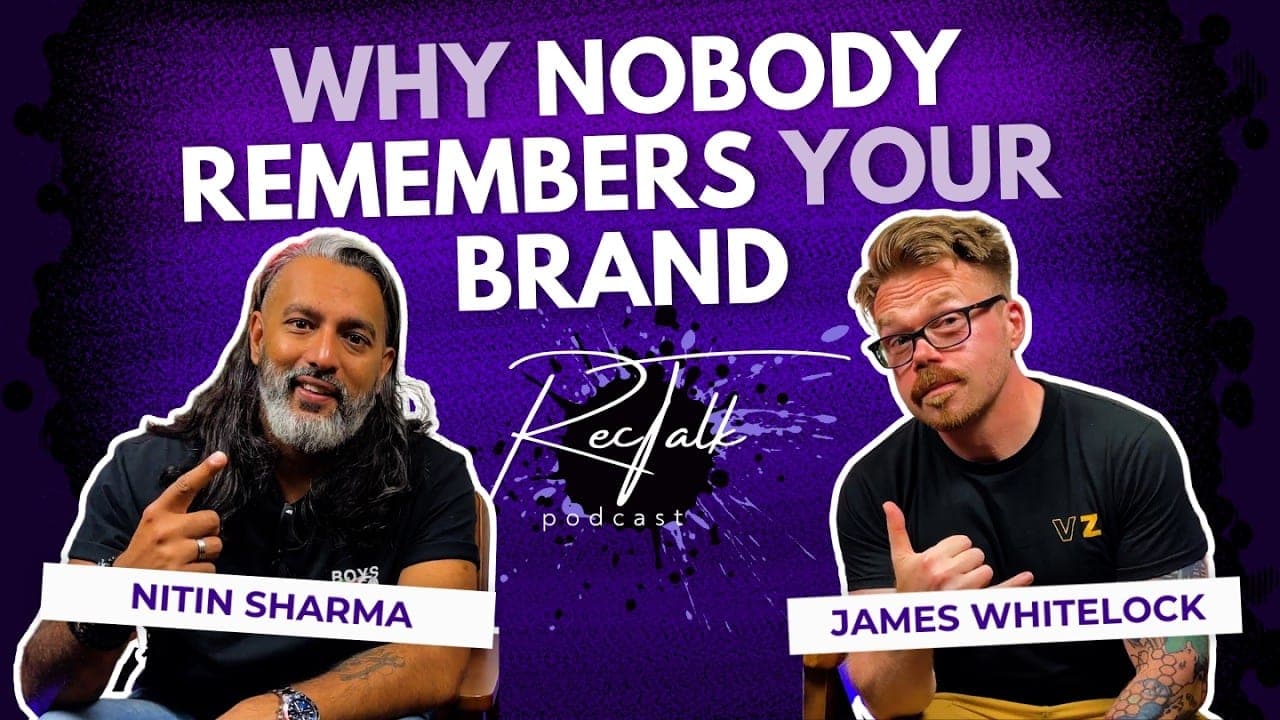
73% of B2B buyers consider thought leadership to be a more trustworthy basis for judging a company's competencies than traditional marketing materials (Edelman-LinkedIn B2B Thought Leadership Impact Report (opens in a new tab)). And yet most recruitment agencies, when they feel invisible in their market, respond the same way: more posts, more ads, more content, more activity. James Whitelock, founder of ThinkinCircles (opens in a new tab), has spent over a decade working with recruitment businesses on their marketing — and his diagnosis of the underlying problem is consistent. Most agencies don't need more marketing. They need greater belief in what they stand for. And those are not the same thing.
Why Visibility Without Position Is Just Noise
There's a version of recruitment marketing that looks busy and achieves very little. Regular LinkedIn posts that tick the content calendar. A redesigned website that says the same things the old one said but with better imagery. A newsletter that goes out monthly to a list that never replies. The activity is real; the authority it builds is not.
Visibility — being seen — is not the same as authority — being trusted and preferred. A recruitment agency can be consistently present across every relevant channel and still not be memorable. The test isn't whether people have seen you; it's whether people think of you specifically when a relevant problem comes up. And in a market where most agencies use the same language, make the same claims, and target the same audiences with structurally identical messages, presence alone doesn't create that kind of preference.
James's framing of the problem is direct: most recruitment agencies end up saying exactly the same things because they've optimised for safety rather than distinctiveness. Safe is fine. Safe doesn't get you hired over a competitor who's five pounds cheaper. And in a market where the product — finding and placing people — is fundamentally the same from agency to agency, the brand is the only thing left to differentiate on.
The Commodity Trap
When you sound the same as everyone else, you compete on price. This isn't a theory — it's how buyers behave when they can't tell suppliers apart. If five recruitment agencies are pitching for the same PSL and they all describe themselves using the same language ("experienced consultants," "deep sector knowledge," "committed to your success"), the purchasing decision defaults to cost, speed, or whoever the buyer happens to have an existing relationship with. The brand has done nothing to shift the odds.
The commodity trap is particularly acute in recruitment because the industry genuinely believes it's differentiated. Talk to almost any agency owner and they'll tell you their consultants are better, their candidate relationships are stronger, their understanding of the sector is deeper. They're often right — the quality difference is real. But if that difference isn't legible in how they present themselves to the market, it doesn't affect the buying decision.
James's observation is pointed: the agencies that escape the commodity trap aren't necessarily doing better recruiting. They're doing better positioning. They've identified the specific problem they're most credible at solving, they've expressed a clear point of view on that problem, and they've built their marketing around owning that conversation — not just participating in it.
What "Owning a Conversation" Actually Means
It's a phrase that risks sounding like marketing jargon, so it's worth being specific. Owning a conversation means being the name that comes up when people in a specific market talk about a specific problem. Not "a recruitment agency" — the agency that a particular sector's hiring managers associate with a particular challenge.
That kind of association isn't built by being more visible. It's built by having a consistent, specific, credible point of view on a problem that matters to the audience you're trying to reach — and expressing that point of view repeatedly, over time, in ways that demonstrate genuine understanding rather than generic enthusiasm.
53% of B2B buyers say thought leadership has directly influenced a purchasing decision (Edelman (opens in a new tab)). 75% of executives have explored products or services they weren't considering after engaging with compelling thought leadership content. The mechanism is clear: an agency that publishes a substantive piece of analysis on why mid-level engineering talent is leaving a specific sector, with specific data and a specific argument, has demonstrated something that a well-designed website never can — that they actually understand the problem.
The Difference Between Marketing and Market Leadership
Marketing promotes what you do. Market leadership defines what the conversation is. Most agencies are doing the first and wondering why it doesn't produce the outcomes that come from the second.
The agencies James highlights as examples of getting this right aren't necessarily the biggest spenders on marketing. They're the ones that have made a deliberate decision about the problem they're known for — and invested in being genuinely useful to the people who have that problem, not just visible to them. The content they produce isn't promotional in the traditional sense. It's the kind of thing their target audience reads because it helps them understand something they're actually wrestling with. The agency brand benefits as a byproduct of that usefulness, not as the primary purpose of the content.
That's a fundamentally different brief from "produce more content." It requires knowing what you actually believe about your market — which is where James's point about belief becomes practical. An agency that doesn't have a clear, genuine view on what's broken in the market it serves, or what makes the difference between a hire that works and one that doesn't, will produce generic content regardless of how much effort goes into it. Belief isn't a soft concept. It's the raw material that makes marketing worth reading.
Building Authority Without a Big Budget
The authority-building argument often gets dismissed by smaller agencies as something only well-resourced businesses can pursue. James pushes back on this. The agencies that have built genuine authority in their niches haven't, in most cases, done it through expensive campaigns. They've done it through consistency — a clear point of view, expressed regularly, in their own voice, to a specific audience who recognises them as the people who get their sector.
Founder-led content is particularly powerful in this context because it carries something that polished corporate marketing almost never does: authentic perspective. A founder who will say something specific — "here's why we think the current approach to senior tech hiring is broken, and here's what we do differently" — is more credible to a procurement director than a brand that produces content designed not to offend anyone. The safety of saying nothing distinctive protects you from nothing and costs you the position you could have had.
Real Talk
More posts won't fix an unclear position. More ads won't fix the fact that you sound the same as your competitors. More visibility won't build the authority that makes clients prefer you when the decision is genuinely close. The question isn't how much you're marketing — it's whether you've given anyone a specific, credible reason to think of you first.
This post is inspired by the RecTalk episode with James Whitelock of ThinkinCircles: Own the Conversation: Why Better Marketing Isn't the Answer (opens in a new tab). Watch the full conversation on YouTube. Find out more about ThinkinCircles at thinkincircles.com (opens in a new tab).
Looking for marketing and brand specialists built for recruitment agencies? Browse 1,000+ vetted recruitment suppliers and 49,000 real reviews — free — at rectools.io.