

High Performer or Highly Performative? 5 Hard Truths for Agency Owners Who Can't Switch Off
Turning over millions and still miserable? A-Game's Adam Smith and Adam Mayhew on validation, burnout and why agency owners can't switch off.
News
Turning over millions and still miserable? A-Game's Adam Smith and Adam Mayhew on validation, burnout and why agency owners can't switch off.
Crooton CEO Stephen Anderson on geofencing, billboards and why always-on employer branding can cut cost per quality application by up to 50% in 12 months.
Louisa Plint of Auxeris on VAT, cash vs profit, long contracts and why nearly every debt can be negotiated. Real talk for recruitment agency owners.
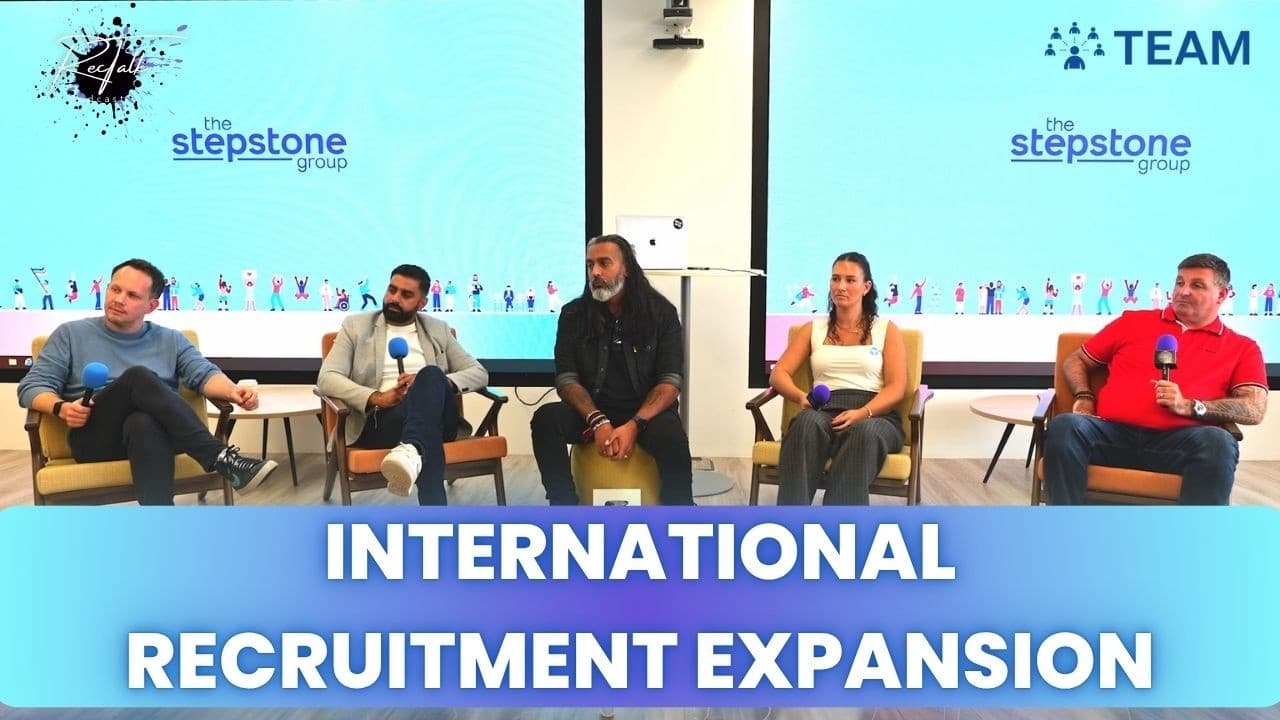
A .com domain and a New York number don't make you a US recruiter. Four recruitment tech experts on what UK agencies get wrong in the States, and how to fix it.
Bullhorn's Tom tells Nitin Sharma why messy CRM data will sink your AI plans, and what recruitment agencies should fix first.
Sarah Higgs of Recruitment Angel on holiday cover, CRM migrations and why recruitment founders need fractional support, not just another virtual assistant.

Ask any recruiter the best part of the job and they’ll say the people. Ask the worst part and they’ll say the people, too. That’s recruitment. It’s messy, human and personal, and it’s never been about chasing right-to-work expiries or pulling together Friday’s report. After more than 12 years in staffing technology, I’ve learned that the people, on the good days and the bad, are what a great brand
Responding to high-profile industry closures and strategic pivots, Anderson reflects on the death of traditional job listings, crooton’s early mistakes, and why the talent sector requires rapid adaptation. October 2026 — Traditional job advertising channels are undergoing a fundamental structural transformation, driven by a rapid shift from active job board listings to targeted, brand-led passive

Recruiters are already using tools like Claude and ChatGPT to prepare for meetings, research clients, write follow-ups and pull together reports. But those tools don’t know the history sitting in your recruitment platform unless you give it to them.

A recruitment sub-brand is a deliberate decision to build a second brand identity inside your business, usually to reach a distinct audience, specialise in a new market, or position against an emerging opportunity. Done well, it extends your reach without diluting what you have built.

The typical sequence for a recruitment agency entering a new market goes: spot an opportunity, get excited, build a brand or marketing campaign, hire into the new area, and then discover — usually six months in — that the market entry hasn't worked.

You Probably Don't Need a New Brand. You Need a Better Strategy. Industry research puts the rebrand failure rate at around 40%, with poorly executed rebrands generating an average 22.7% sales decline in the first quarter after launch and companies spending an additional $4.2 million on average in…
Agencies that prioritised automation in 2025 were 57% more likely to hit their revenue targets (Pin, AI Adoption in Recruiting 2026). Agencies using AI in their workflows are growing roughly four times faster than those that aren't.
AI adoption in recruitment agencies hit 61% in 2025 — up from 48% in 2024 (Pin, AI Adoption in Recruiting 2026).
AI stopped being the edge the moment everyone got it. Every recruiting firm now has a resume parser, a scheduling bot, an AI writing assistant, maybe a sourcing tool bolted to the side of the ATS. The tools are no longer the differentiator. What one firm can buy, every competitor can buy by Friday.
28% of UK businesses have already turned to short-term financing — loans, credit lines, overdrafts — to manage cash flow problems caused by late payments (QuickBooks UK, 2025).
63% of recruitment invoices are paid late. Late payments cost the UK economy £11 billion per year and are responsible for closing 38 UK businesses every day (Small Business Commissioner).
95% of B2B decision-makers say thought leadership makes them more open to sales outreach from companies they weren't previously considering (Edelman-LinkedIn B2B Thought Leadership Impact Report).
73% of B2B buyers consider thought leadership to be a more trustworthy basis for judging a company's competencies than traditional marketing materials (Edelman-LinkedIn B2B Thought Leadership Impact Report).

"They're not worth the paper they're written on." It's one of the most repeated pieces of informal legal folklore in the recruitment industry — and like most folklore, it's partly true and mostly misleading.

Over 42,000 single employment tribunal claims were filed in the UK in 2024/25 — a 23% increase year-on-year (GOV.UK Tribunal Statistics). Legal fees for defending a tribunal claim start at £10,000 for a simple case and can reach £54,000 or more for complex disputes.

In AI search, specificity wins. When a hiring manager asks ChatGPT or Gemini to recommend a recruitment agency for a niche role, the AI isn't looking for the biggest agency or the one with the most office locations.

ChatGPT reached 900 million weekly active users in early 2026. Gemini surpassed 750 million monthly active users by the end of 2025. These aren't just messaging apps — they're where a growing share of professional and business queries are being asked and answered.
74% of employees say their remote onboarding process was a failure (Paychex, via Speakwise).
76% of UK employers report difficulty filling roles due to a lack of skilled talent (ManpowerGroup 2025 Talent Shortage Survey), and the average cost of a UK hire has reached £6,125 (CIPD).
The average cost of hiring in the UK is £6,125 per placement (CIPD). A significant portion of that figure goes on external advertising — job boards that charge per click, per post, or per placement, delivering candidates who may be no better than the ones already sitting in your database.
99% of Fortune 500 companies now use some form of AI in their hiring process — and yet regulators across the US, UK, and EU are all moving in the same direction: requiring human oversight at every point where AI influences who gets a job. That tension isn't an accident. It's a signal.

The UK Government's consultation on guaranteed hours for agency workers — part of the Employment Rights Act 2025 — closes on 25 August 2026, with implementation targeted for 2027.

The UK temporary staffing market is worth £59.1 billion and employs around 1.49 million workers (Staffing Industry Analysts). Almost all of it is now in scope for a piece of incoming legislation that most recruitment agency owners haven't fully read — and many haven't heard of at all.
Specialist recruitment agencies command EBITDA multiples of 6.5x to 7.5x in the current UK market — while generalist agencies typically trade at 5.0x to 6.0x (GS Verde).
M&A activity in the UK recruitment sector hit 74 completed transactions in 2025 — up from 63 in 2024 and 58 in 2023 (Moore Kingston Smith).

Companies that use retained recruitment report placement satisfaction above 92%, compared to 76% for large-scale contingency projects (Treeline). Most recruiters know retained work is better — better margins, better relationships, better outcomes.

87% of companies have now incorporated AI into their recruitment processes (DemandSage) — and yet most agency owners will tell you they're not seeing transformative results. The tools are there. The subscriptions are active. And the outcomes are… fine, at best. Confusing, at worst.

UK savers lost almost £7 billion in real purchasing power to inflation in 2025 (Yahoo Finance / Fidelity) — most of it from people who thought their money was sitting safely in a bank account. As of mid-2026, the average UK easy-access savings rate is around 2.12%, while inflation sits at 2.8%.

61% of higher-rate self-employed taxpayers in the UK are not contributing to a pension (Gilt Edge).

A third of UK SME owners cannot correctly define cash flow — despite 82% of them reporting difficulties with it (QuickBooks). In recruitment, that number likely skews even higher — because most people who start agencies come from a billing background, not a finance one.

A LinkedIn message is three times more likely to get a reply than a cold call — and six times more likely to be opened than a cold email (Mobile Rocket). But even that stat misses the bigger shift happening in recruitment right now.

Personalised emails generate 29% higher open rates and a 41% higher click-through rate than generic outreach (Mailforge, 2026). That stat should land hard for any agency still relying on volume — sending hundreds of speculative CVs a week and wondering why the conversations aren't happening.

Cold email reply rates have dropped from 8.5% in 2019 to under 3–5% today (Cleanlist, 2026). For recruitment agencies, that decline stings harder than most — because you've done everything right. SPF, DKIM, DMARC are all set up. Your domain is warmed. Your emails are landing in the inbox.

Here's a number that should recalibrate your entire BD approach: only 3% of buyers fully trust sales reps (CustomerThink, via SalesHive). Three percent.

Here's a stat that should make you uncomfortable: 80% of sales close after five or more follow-ups, yet 92% of salespeople give up after the fourth attempt — and 44% quit after just one (Peak Sales Recruiting).

Jeremy Snell has a way of cutting through the noise. Recorded on his farm — lambs wandering into shot, plaque proudly displayed — the RecTalk conversation with Nitin Sharma was one of those episodes that sounds casual but lands hard. The topic: what actually wins business in recruitment.
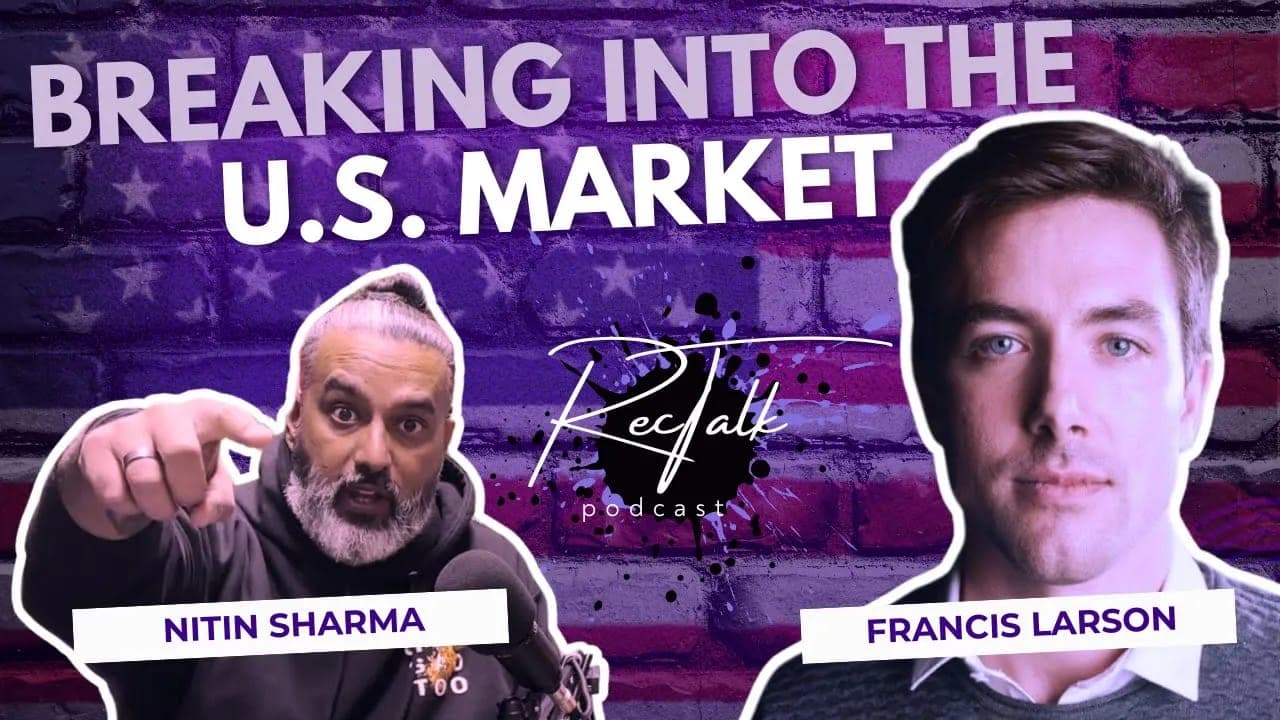
The landscape for UK recruiters entering the US has shifted significantly. Two conversations on RecTalk with Francis Larson — CEO of Ascen, the Y Combinator-backed EOR platform now part of Upwork — lay out exactly what's changed and what it means for your strategy.
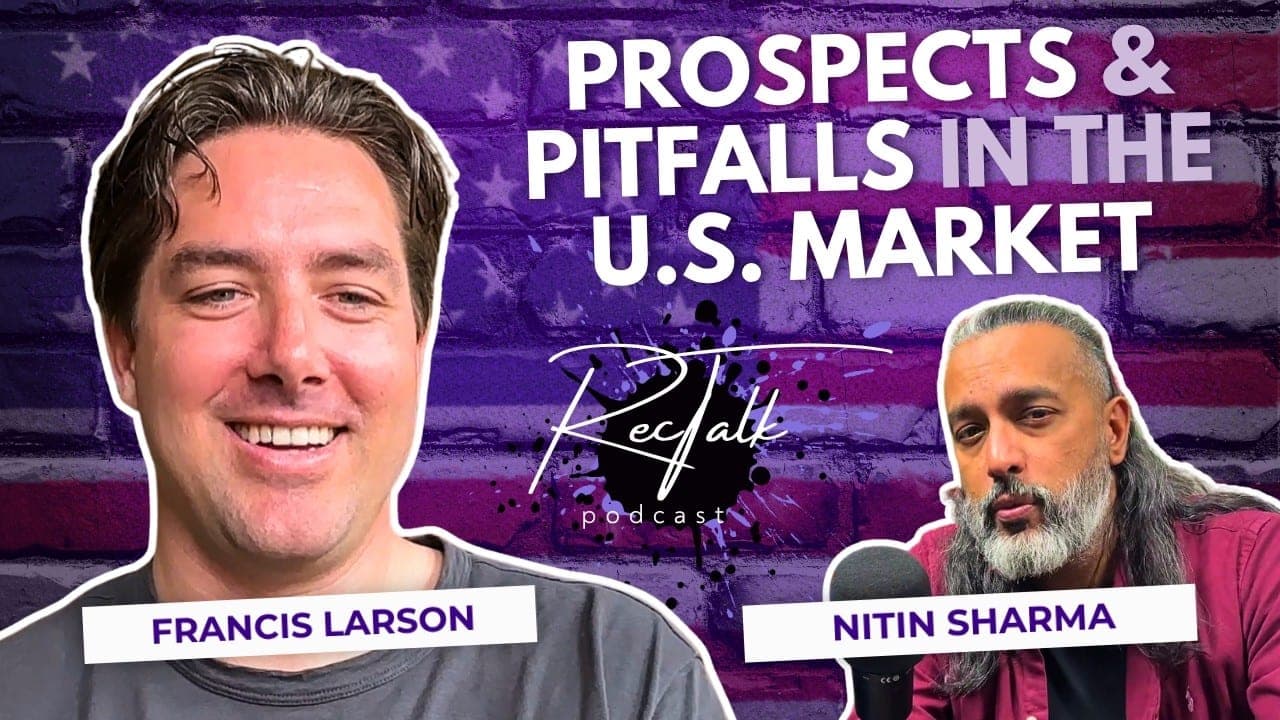
The US staffing market is enormous, growing, and full of well-funded competitors. It is also — according to Francis Larson — strangely, almost embarrassingly, easy to enter. "The staffing market... to set up a staffing company is the easiest thing.
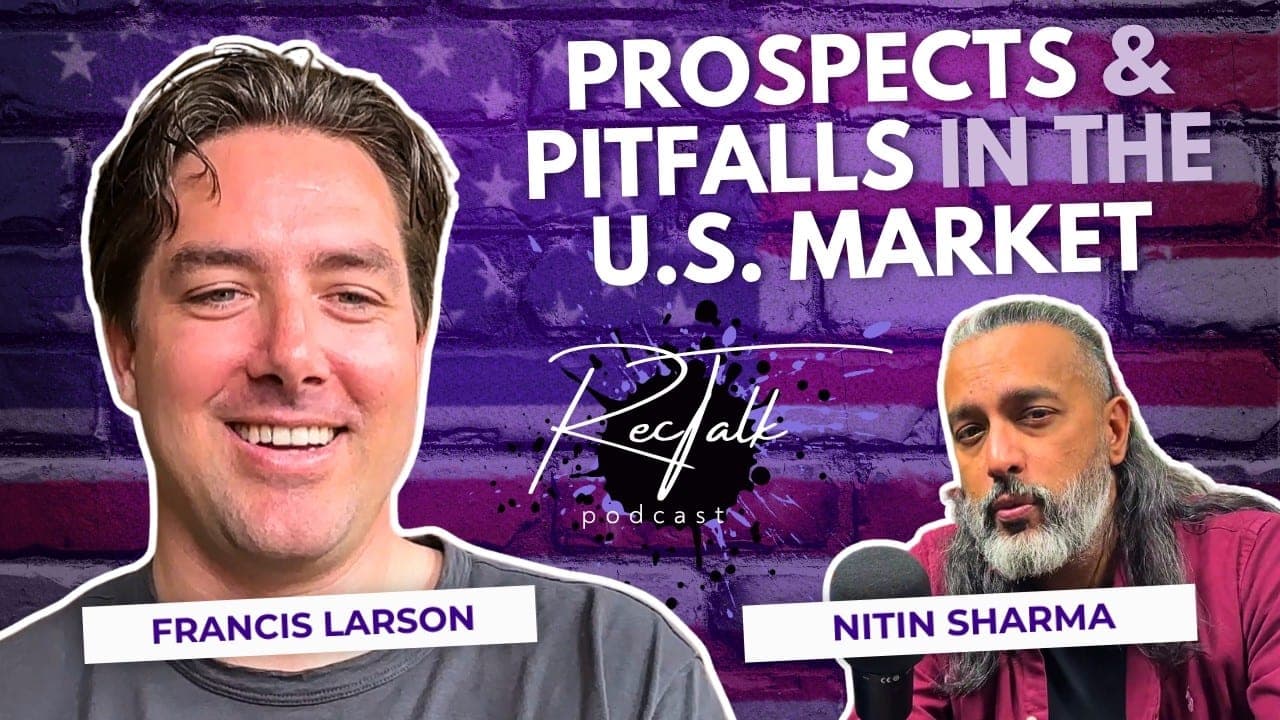
There's a moment that catches almost every UK recruitment agency off guard when they try to place contract workers in the United States. Everything is going well. The client likes you. The candidates are strong. You're about to make your first US placement.
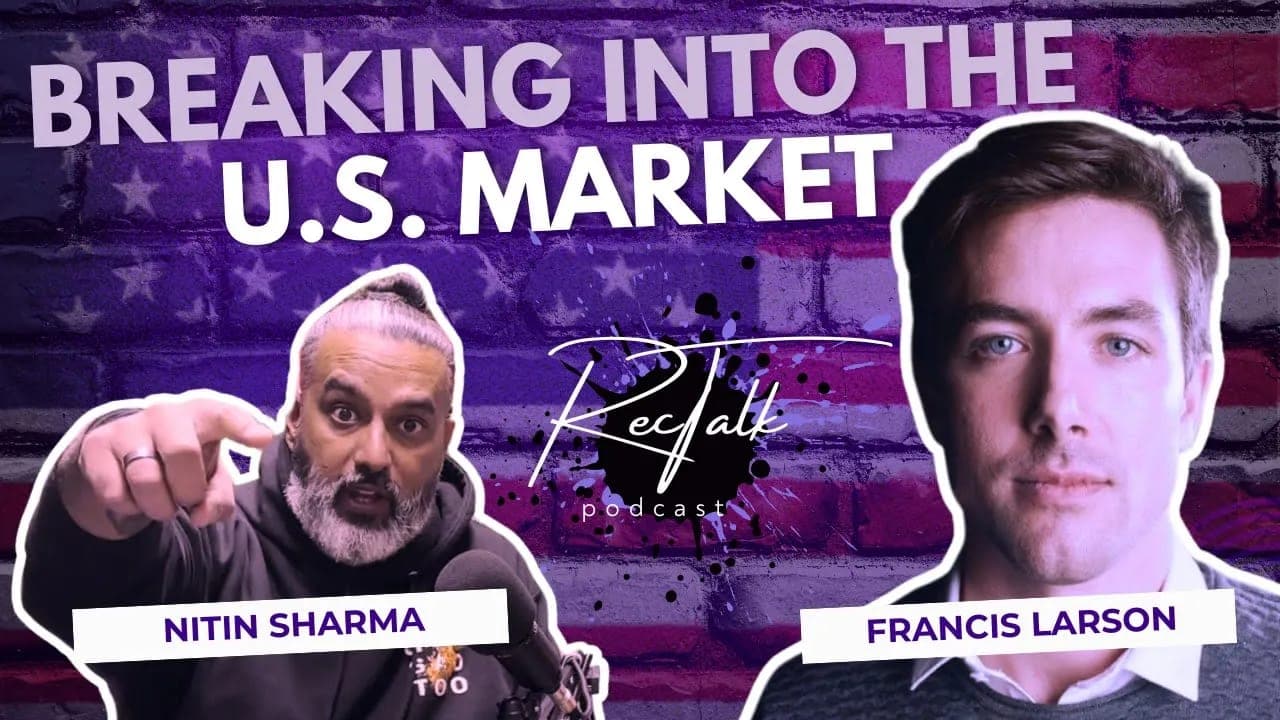
Francis Larson doesn't mince words. "Any kind of cold outbound I think is just dead dead. It's all just spam now. It's all devolved to spam. It's just sludge. I don't think it works.