Why Having an Opinion Is the Most Underused Marketing Asset in Recruitment
By Nitin
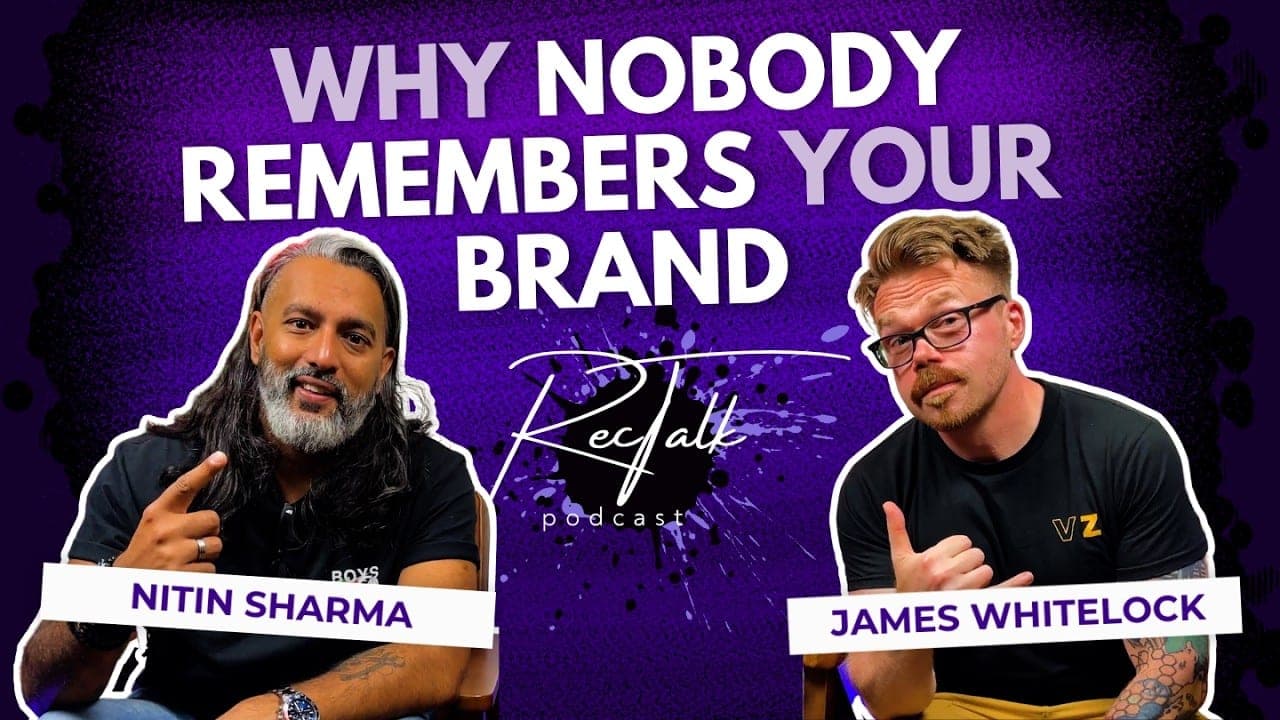
95% of B2B decision-makers say thought leadership makes them more open to sales outreach from companies they weren't previously considering (Edelman-LinkedIn B2B Thought Leadership Impact Report (opens in a new tab)). And yet the default setting for most recruitment agency marketing is carefully constructed inoffensiveness — content that could have been published by any of the ten agencies in a given niche without anyone noticing the difference. James Whitelock, founder of ThinkinCircles (opens in a new tab), has a specific name for the underlying problem: playing it safe. And his case for why playing it safe is actively harmful to an agency's position is one of the more direct arguments in recruitment marketing right now.
Why Playing It Safe Makes You Invisible
Safe marketing optimises for not being wrong rather than for being right. It produces content that mentions the skills shortage but doesn't take a position on it. It describes services rather than arguing for a specific approach. It shares industry news without editorial perspective. It's the marketing equivalent of nodding politely — present, technically engaged, and entirely forgettable.
The problem with forgettable isn't just that it fails to build brand. It's that it actively cedes territory to the agencies and individuals in a market who are willing to say something specific. When one agency in a niche publishes a substantive, argued piece of analysis on what's actually happening in their sector — where the talent is moving, what's driving it, what they'd recommend clients do differently — that agency occupies a position in the market that the silent majority can't claim. They've demonstrated expertise in a way that a case study or a capabilities deck cannot.
James frames this as the difference between participating in a conversation and owning one. Every agency in a niche is, to some extent, participating — attending events, posting on LinkedIn, pitching for briefs. Owning a conversation means being the reference point for a particular question or problem. The agency whose name comes up when a hiring director says "who do you think really understands what's going on with senior tech hires right now?" That's a position built by having an opinion and sharing it consistently, not by producing more content.
Why Founder Passion Rarely Becomes Memorable Marketing
Talk to almost any recruitment agency founder about why they built their business and the answer is usually specific, personal, and genuinely differentiated. They spotted a gap in the market. They had a view on how hiring in their sector was being done wrong. They built something around a belief that wasn't widely shared at the time. That origin story is rich with the material that makes for compelling positioning.
Ask those same founders to describe their marketing and the answer is almost always a capabilities list. Fast turnaround times. Deep candidate pools. Consultants with sector experience. The things that are true of them are also claimed by every competitor, expressed in the same language, on the same platforms, to the same audiences.
The translation from passion to position is where most agency marketing breaks down. The founder knows what they believe about their market — often very clearly. The marketing produced in the agency's name says nothing about it. James's argument is that closing that gap is not primarily a marketing execution problem. It's a belief problem. An agency that doesn't trust that its genuine point of view is interesting and valuable to its audience defaults to safe. The agencies that have built genuine authority are, without exception, the ones whose founders have been willing to express what they actually think — not just what they offer.
From "We Place Engineers" to "Here's What's Actually Broken"
The shift in marketing that James is describing is a shift from service description to problem definition. "We recruit engineers" is a capability claim. "Here's why the talent pipeline for senior renewable energy engineers has structurally thinned over the last three years, and here's what that means for the hiring strategies of scale-ups in this space" is a position.
The second version is harder to produce because it requires genuine knowledge and a willingness to be specific. It also does something the first version never can: it demonstrates that the agency understands the problem their clients are actually trying to solve, not just the service they're theoretically in the market to buy. 71% of B2B decision-makers say thought leadership is more effective than conventional marketing or sales materials at demonstrating a vendor's potential value (Edelman (opens in a new tab)). The mechanism isn't complicated: a hiring director who reads something that precisely articulates the challenge they're facing, and offers a credible argument about how to approach it, has already started the process of trusting the agency before a conversation has taken place.
This matters particularly for business development. An agency known for a specific, argued position in its niche generates a qualitatively different kind of inbound than one known only for a logo and a LinkedIn presence. The enquiries come pre-framed — the potential client has already decided that this is the agency with the right perspective on their problem. The sales conversation is shorter, the competitive pressure is lower, and the fee conversation is easier because the perceived expertise has already been established.
What "Authentic" Actually Means in Practice
Authenticity in marketing has become a cliché precisely because it's used to describe polished content that isn't authentic at all. What James means by it is more specific: does the content express what the person producing it actually believes? Is there a real point of view embedded in the message, or is it content that could have been produced by anyone?
Founder-led content has a structural advantage here because it's harder to sand the edges off a real person's opinion than it is to produce safe corporate content. A founder who writes a post arguing that a specific approach to retained search consistently produces better outcomes than contingent, with specific reasons and a specific argument, is putting something at stake. They might be wrong. Some readers will disagree. That's exactly what makes it worth reading — and worth sharing.
The agencies that James identifies as having built genuine authority in their niches aren't producing content that's immune to disagreement. They're producing content that's specific enough to generate disagreement — and that precision is what builds the community of people who do agree, who trust the perspective, and who eventually become clients or referral sources.
Building Authority on Any Budget
The authority that comes from consistent, specific point-of-view content doesn't require a marketing team. It requires consistency and conviction. One piece of genuinely argued content per month, addressing a specific, current challenge in the niche the agency serves, compounds over time in a way that a thousand safe posts don't. The audience grows slowly and sticks. The inbound enquiries that result are better qualified. The brand begins to occupy a specific space in the market rather than simply being present in it.
This is within reach of any agency whose founder has genuine sector knowledge and is willing to share what they actually think. The barrier isn't resource. It's the decision to stop optimising for safety and start optimising for being worth reading.
Real Talk
The most valuable marketing asset most recruitment agency founders possess is the clear, specific, experience-based opinion they've formed about their market — and most of them never use it. Playing it safe protects you from criticism and costs you the position. Say something specific. Be willing to be disagreed with. The people who agree with you are the ones worth talking to.
This post is inspired by the RecTalk episode with James Whitelock of ThinkinCircles: Own the Conversation: Why Better Marketing Isn't the Answer (opens in a new tab). Watch the full conversation on YouTube. Find out more about ThinkinCircles at thinkincircles.com (opens in a new tab).
Looking for marketing and brand specialists built for recruitment agencies? Browse 1,000+ vetted recruitment suppliers and 49,000 real reviews — free — at rectools.io.