A .com Won't Save You: 7 Mistakes UK Recruiters Make in the US
By RecTalk Media
The US is the prize every ambitious UK agency owner has their eye on. In early 2025, Staffing Industry Analysts forecast the US staffing industry would grow 1% in 2025 to a market size of $188.7 billion (opens in a new tab). Plenty of money, then. But real talk: a big market is also a crowded one, and being a big name in Manchester counts for very little in Chicago.
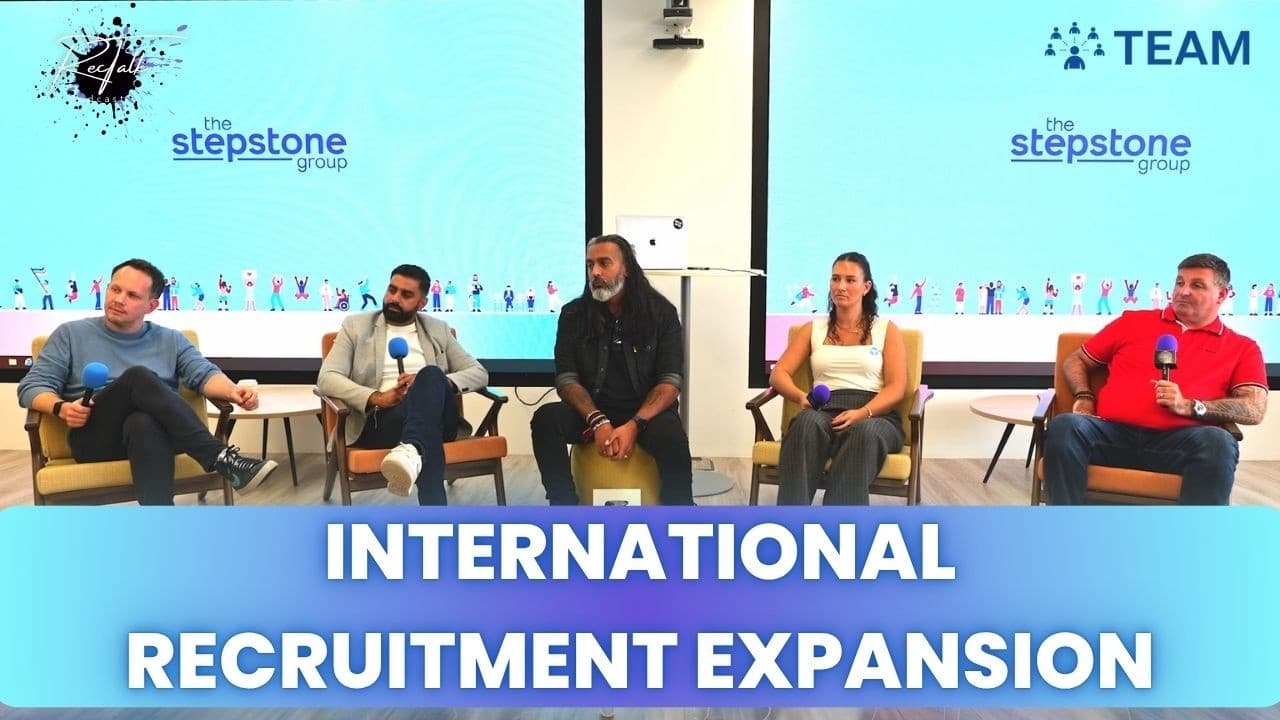
At a TEAM International panel, Nitin Sharma sat down with four people who see agencies try (and sometimes fail) to go international every week: Emily White (Lead Account Manager, SourceWhale), Gordon Webb (Sales Director for Europe, Shazamme), Rohit Kapoor (Co-founder, Paiger) and Nick Browne (Co-founder, Devyce). Here's what they said UK recruiters keep getting wrong. Watch or listen to the full episode on RecTalk (opens in a new tab).
Mistake 1: thinking a .com and a US number make you local
Gordon kicked things off with the classic move: buy a .com, add a New York number, job done. Not quite.
"Just having a UK workflow with a .com domain and a US phone number is still a UK workflow," he said. Salaries, date formats, spelling and job terminology all change, and your website is the first thing a US client or candidate sees.
His favourite example? "We call it temp, they call it staffing." He suggests a separate US site that US visitors are routed to automatically, and checking that your ATS can handle a US workflow end to end.
Mistake 2: trying to win the whole country at once
"America… it's such a big country," said Rohit. His advice: "Double down on a state, double down on a town and then look at your first 100 companies and target them first." And pick your niche.
Gordon added that different states have different compliance rules, so knowing exactly where you're going matters before you spend a penny on tech.
Mistake 3: assuming your UK reputation travels with you
Nick didn't hold back: "There's a sort of old adage that America and Australia is where European software companies go to die." He was talking about tech firms, but he says agencies make the same mistake: "You can be quite arrogant that you have a great business here and you have a good network."
He has seen a successful UK customer move to the States and discover "there's people just as good as you doing what you do here." His fix:
- Get boots on the ground at some stage
- Have the coffees and dinners you had in your early days here
- Accept the UK may need to run itself for a while so you can go "full throttle" on the US
Mistake 4: barging in like you own the place
Nitin shared what US recruiters and suppliers have been telling him: some UK firms coming over are "a bit aggressive" and "a bit pushy". One US client told him they were putting together a supplier list for the first time.
His warning: there's already an established, profitable market with its own way of working. Respect it, or "in 5 years' time" we'll be blaming the market instead of ourselves.
Mistake 5: no local proof on your website
US buyers are shortlisting before they ever pick up the phone. Gordon said that if your BD is excellent but your site has no local testimonials or localisation, you lose trust at the exact moment you need it. Think US salary information, consultant profiles and client references.
Rohit's reminder: people "will always buy off people", so your consultants' personal brands still do the heavy lifting.
Mistake 6: copying your UK outreach playbook
Emily's advice was to let your data decide. "SMS is massive in America," she noted, time zones change when you call, and your sequences will need to change too.
- Record every conversation so it lands in your CRM, not someone's notebook
- Ask your AI which problems clients raised in the last three months, and build sequences around them
- Test it: is a nine-step sequence, more calls or more SMS working for you?
And check the rules before you hit record. Nick pointed out that call-recording rules vary by state, naming Florida and Massachusetts, and that responsibility for staying legal sits with you, not your software provider.
Mistake 7: drowning in tech (and long contracts)
Nick described asking a customer to walk him through a new starter's 9am Monday: "By the time they've got through to their 10th login… it's like 4:00." His verdict: "Tech is not going to save you."
The panel's predictions for the next few years:
- Fewer tools. Nick expects "three or four max", including your phone and your CRM.
- All-in-one platforms. Emily explained that SourceWhale moved from outreach tool to all-in-one recruitment CRM, partly to boost profitability per recruiter.
- Meeting notes on autopilot. Gordon said that in 2026, manual CRM notes are "nine times out of 10" not getting done, and named CoRecruit as one to look at. Nick's counterpoint: many CRMs now include a notetaker, so check before paying for a separate one.
On costs: add up everything you pay now and compare it with an all-in-one system. Avoid two- and three-year contracts. As Nick put it: "Power is in all your hands… be really ballsy with what you want because they want your business."
Don't forget the back-office stuff
Contract placements in the US bring payroll, compliance and funding headaches. Two companies on the rectools® panel cover exactly this. Ascen combines employer of record, pay and bill and payroll funding so agencies can work in new countries, including the US, without opening new entities. Agile Partnering offers EOR, back office and funding for UK staffing firms growing in the USA and Canada.
For your front end and workflow, check out SourceWhale, Shazamme and CoRecruit, all on the rectools® panel. Not sure where to start? Ask rectools®.
The bottom line
The US doesn't punish ambition. It punishes laziness. Localise properly, go narrow, show up in person, respect the people already there and keep your stack lean. As Rohit said, you can use all the tech you like, but "people are still going to buy off people."
Want the full chat, audience Q&A included? Catch the episode on RecTalk (opens in a new tab).