The One Decision AI Should Never Make for Your Recruitment Business
By Nitin
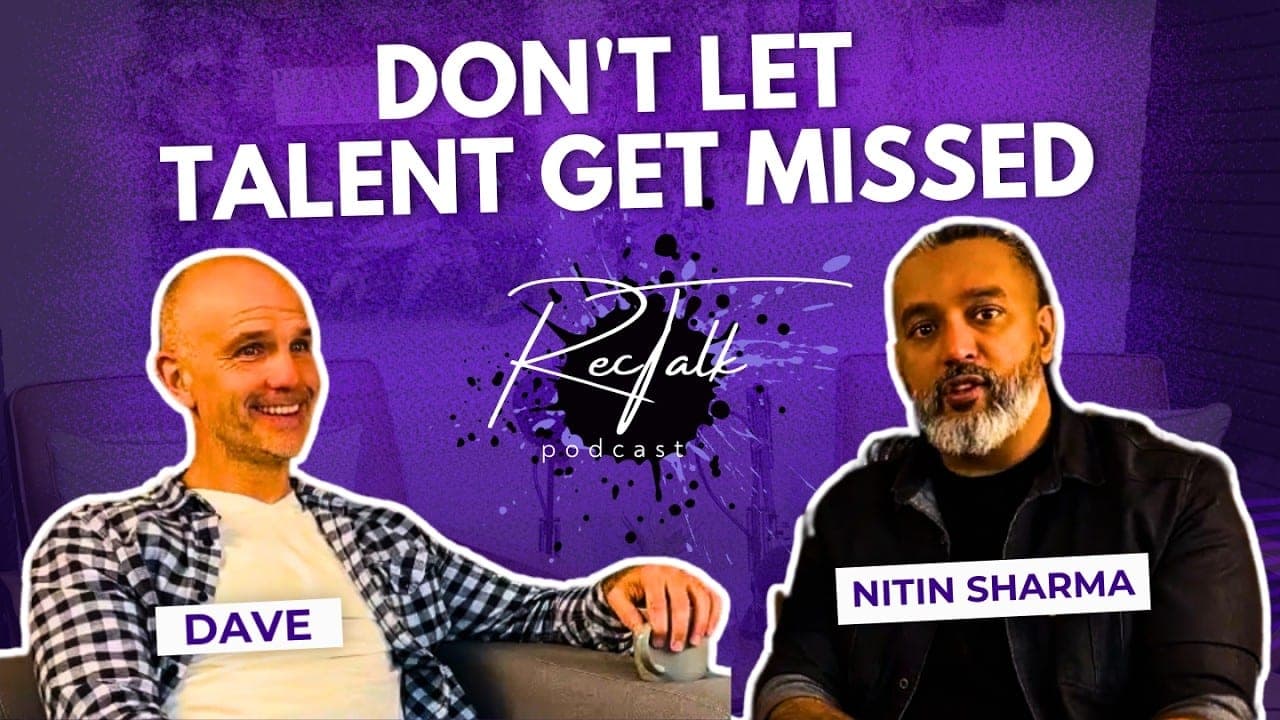
99% of Fortune 500 companies now use some form of AI in their hiring process — and yet regulators across the US, UK, and EU are all moving in the same direction: requiring human oversight at every point where AI influences who gets a job. That tension isn't an accident. It's a signal. Dave Jenkins, founder of Wave (opens in a new tab), has spent over 25 years building recruitment technology — and his position is unambiguous. AI can make recruiters faster. It should never make the hire.
What AI Is Actually Good at in Recruitment
The honest answer is: quite a lot. AI is genuinely useful for the high-volume, rules-based tasks that consume recruiter time without requiring recruiter judgement. Screening CVs against clearly defined criteria. Matching candidates to live roles from a database. Posting jobs across multiple boards simultaneously and tracking which channels drive applications. Drafting initial outreach. Generating job descriptions. Summarising candidate histories before a call.
These are meaningful productivity gains. A consultant who isn't manually sifting through 200 applications has more time for the work that actually requires them — the conversations, the relationship-building, the sector knowledge that no algorithm holds. Dave's view is that technology built for recruiters should amplify that expertise, not replace it. Wave's evolution from a traditional multi-poster into a candidate attraction platform is grounded in exactly that principle: give recruiters better tools, then get out of the way and let them do the job.
The problem starts when AI stops being a tool and starts being treated as a decision-maker.
Why AI Cannot Make the Final Call
Hiring decisions are judgement calls. They depend on context that doesn't live in a CV — the candidate's motivation for moving, the team dynamic they'd be joining, whether their quiet period of twelve months was a personal crisis, a strategic pivot, or a parenting break that has no bearing on their ability to do the job. They depend on a recruiter's understanding of a client relationship that has taken years to build. They depend on instinct earned through hundreds of conversations in a specific sector.
AI systems are trained on historical data. When that data reflects patterns of who got hired — and human hiring has always been shaped by bias — the AI learns to replicate those patterns. A 2022 analysis found that 61% of AI recruitment tools trained on biased data replicated discriminatory hiring patterns. A 2025 Stanford study found that AI resume-screening tools gave older male candidates systematically higher ratings, regardless of comparable qualifications. Separately, leading AI models were found to disadvantage Black male applicants even when their CVs were identical to those of higher-rated candidates.
This isn't a software bug. It's a structural problem. If the AI learns from decisions made by humans who were, consciously or not, influenced by factors unrelated to competence — it amplifies those decisions at scale. One biased hiring manager makes bad decisions for one desk. An AI system makes the same bad decision for every candidate who comes through the funnel.
The Legal Landscape Is Catching Up
Regulators have noticed. The EU AI Act explicitly classifies recruitment and employment decision-making as high-risk AI — requiring transparency, documentation, and human oversight. In New York City, employers must now conduct annual bias audits of any automated employment decision tool and publish the results. Colorado's AI Act, effective June 2026, requires developers and users of AI hiring tools to take reasonable care to prevent algorithmic discrimination. Illinois amended its Human Rights Act to require employers to notify applicants when AI is used in hiring decisions from January 2026.
The direction of travel is unmistakable. Across jurisdictions, the regulatory consensus is that AI can assist hiring; it cannot autonomously determine it. The Staffing Industry Analysts' 2025 executive outlook found data privacy and AI tied as the top compliance concerns among North American staffing executives, each cited by 45% of respondents. Recruitment agencies operating in this environment can't afford to treat AI-assisted hiring as a legal grey area — because it increasingly isn't.
What "Keeping Humans in the Loop" Actually Means
It's a phrase that gets repeated without much thought about what it means in practice. New York City's guidance is instructive: the law applies even when a human makes the final decision based on AI rankings or scores. If an AI screens 200 CVs and presents you with a shortlist of 10, your human review of those 10 is real — but the AI's decision about who doesn't make the list never got reviewed at all. Keeping humans in the loop means humans reviewing decisions, not just outcomes.
In practice, this means:
- AI as first-pass filter, human as qualifier. Use AI to organise and surface candidates. Have a consultant decide who to call — and be willing to go beyond the shortlist when instinct says the algorithm missed something.
- Transparency with candidates. If AI is influencing whether someone progresses in your process, know that — and be prepared to explain it. The regulatory direction requires it; your professional reputation benefits from it.
- Regular audit of AI outputs. If your screening AI consistently under-selects candidates from a particular background, that's not a coincidence. It's a problem that needs fixing before it becomes a tribunal claim.
- Keeping the hire itself human. The final decision — who gets the offer — should never be delegated to an algorithm. It is the most consequential call in the process. It belongs with the recruiter who knows the client, the role, and the candidate.
The Technology Should Work for the Recruiter
Dave's framing throughout is consistent: good recruitment technology exists to support recruiter expertise, not to substitute for it. Wave's platform is built on that principle — helping recruiters find, attract, and manage candidates more efficiently, so that when they get to the part that matters, they can give it their full attention. The speed gains from AI are real. The judgement that turns a shortlist into a placement is still entirely human.
There's a version of "AI-powered recruitment" that means letting a machine decide who gets through and who doesn't, optimised for pattern-matching against historical data, with minimal human review. That version carries serious legal exposure, replicates the biases it was supposed to fix, and strips out the expertise that clients are actually paying for.
There's another version that means using AI to handle the volume so that recruiters can focus on the parts that require them. That version is worth building.
Real Talk
AI will not put good recruiters out of work. It will put average processes out of work. The agencies that thrive will be the ones that use AI to eliminate the administrative drag and redeploy that time into the human judgement that no algorithm can replicate. The hire is still yours to make. Keep it that way.
This post is inspired by the RecTalk episode with Dave Jenkins, founder of Wave: Why Recruitment Should Never Let AI Make Hiring Decisions (opens in a new tab). Watch the full conversation on YouTube. Find out more about Wave at wave-rs.co.uk (opens in a new tab).
Looking for the AI and recruitment technology tools that actually deliver? Browse 1,000+ vetted recruitment suppliers and 49,000 real reviews — free — at rectools.io.